

How to Build a Gothic Altar: Step-by-Step Guide
Table of Contents
- What You Need Before You Build Your Gothic Altar
- Step 1: Pick the Right Gothic Altar Table for Your Space
- Step 2: Layer Textures and Dark Fabrics
- Step 3: Add Gothic Altar Ideas That Reflect Your Practice
- Step 4: Build a Gothic Altar on a Budget
- Step 5: Small Gothic Altar Ideas for Tight Spaces
- Step 6: Charge and Consecrate Your Space
- Common Mistakes to Avoid When Building a Gothic Altar
- Frequently Asked Questions
Last Updated: October 12, 2026
What You Need Before You Build Your Gothic Altar
A gothic altar is a styled, intentional surface for ritual, reflection, or display, built from dark fabrics, layered textures, candles, and objects that carry personal meaning. Building one takes an afternoon and a clear plan.
Most guides skip the planning stage. That's the mistake that leads to a cluttered table and a look you abandon in a month. Below, we'll show you exactly how to build a gothic altar step by step, including how to do it on a budget and how to make it work in a tiny space.
The five strategies we cover start with your surface and end with consecration. Skip none of them.
Choosing Your Surface and Space
Pick a surface you can dedicate to the altar. A sturdy side table, a dresser top, a bookshelf shelf, or a windowsill all work. What matters is stability and location.
Choose a spot you pass daily but that stays out of foot traffic. A bedroom corner or a quiet hallway nook works well. Avoid the kitchen counter unless you live alone.
Measure the space before you shop. A tape measure saves you from buying a table that doesn't fit. Note the height too. You want a surface between waist and chest height for comfortable candle work.
Core Materials and Altar Tools
Gather these basics before you start styling:
- A table or shelf for the base
- One large cloth plus one accent fabric
- Candles and sturdy holders
- A small dish or tray for small items
- Crystals, stones, or dried botanicals
- One focal object that means something to you
- A small bottle of ritual water or oil
You don't need all of these on day one. Start with the base, cloth, and one candle. Add the rest as you find pieces you love.
Step 1: Pick the Right Gothic Altar Table for Your Space
The best gothic altar table is one that fits your room, holds your objects safely, and matches the mood you want. Size and material matter more than style here.
For a large space, a console table or antique writing desk gives you room to spread out. For a small room, a nightstand or wall shelf does the same job in less space. Dark wood, black metal, and aged brass all suit a gothic look.
Check the weight limit before you load it up. Candles, crystal clusters, and books add up fast. A wobbly table with a lit candle on it is a real hazard.
Three quick checks before you commit:
- Does it sit level on your floor?
- Can you reach the back of it comfortably?
- Does it have at least one drawer or shelf for storage?
That last one matters more than people think. Altar clutter builds up fast without a place to put extras.
Step 2: Layer Textures and Dark Fabrics
Layering starts with fabric. A black lace runner over deep burgundy velvet gives you instant depth. Add a third layer, like a small square of brocade or a torn linen strip, for texture.
Work from the back of the table forward. Tall items go in back, short items in front. This keeps everything visible and keeps candle flames away from draping fabric.
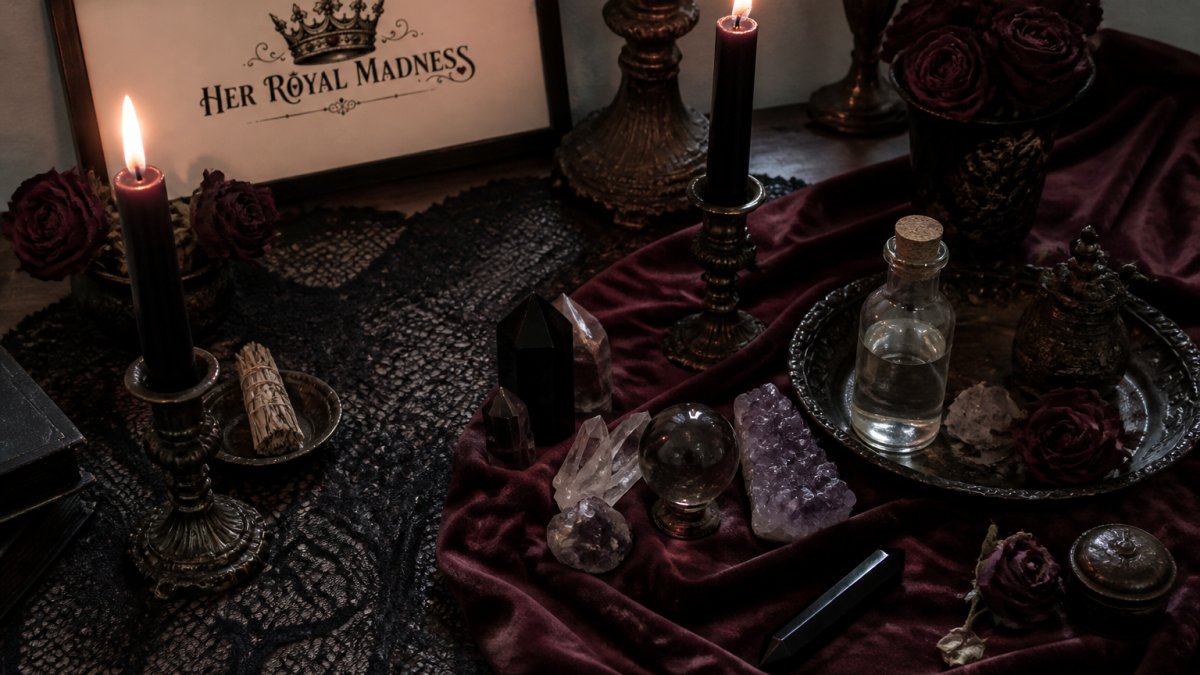
Color keeps the look cohesive. Stick to black, burgundy, deep purple, charcoal, and antique gold. One pop of pale color, like bone white or silver, adds contrast without breaking the mood.
Step 3: Add Gothic Altar Ideas That Reflect Your Practice
The strongest gothic altar ideas come from your own practice, not from a template. Build around what you actually do at the altar, whether that's journaling, meditation, or candle work.
Candles, Crystals, and Ritual Objects
Candles set the mood and give the altar its glow. Use odd numbers, usually three or five, in mixed heights. Black, deep red, and ivory tapers look striking together.
Crystals and stones add weight and texture. Amethyst, obsidian, and smoky quartz fit the palette. A small tray or dish keeps them from scattering.
Ritual objects belong where you can reach them. A small bottle of Moon Water Ritual Set - 2 Bottles & Ritual Cards fits neatly beside a candle and gives you something to work with during ritual. Each set arrives with two glass bottles and a mini ritual card for each.

Personal Touches: Jewelry, Seals, and Keepsakes
This is where your altar stops looking like everyone else's. Add a ring dish, a locket, a favorite stone, or a written intention folded small.
Moon Water Ritual Set – 2 Bottles & Ritual Cards | Her Royal Madness →
Wax seals make excellent accents. The Mad Queen's Wax Seal Collection™ arrives pre-made with adhesive backing, so you can press one onto a journal, a letter, or the front of a small box on your altar without any melting or tools. Designs range from ravens and crowns to celestial moons and serpents.
| Altar Element | Placement | Why It Works |
|---|---|---|
| Tall candles | Back row | Adds height and glow |
| Crystals | Center | Anchors the layout |
| Ritual water | Side | Easy reach during practice |
| Wax seals | Front or journal | Personal, low-profile accent |
| Keepsakes | Front center | Draws the eye |
Step 4: Build a Gothic Altar on a Budget
A gothic altar on a budget comes down to three moves: shop secondhand, repurpose what you own, and buy one statement piece instead of five small ones.
Thrift stores and estate sales turn up brass candlesticks, dark trays, and old books for very little. A coat of matte black spray paint unifies mismatched metal holders in an afternoon.
Free and cheap sources people forget about:
- Jars and bottles for holding dried flowers
- Fabric scraps from old clothing for layering
- Stones and shells collected on walks
- Printed images or cards tucked into frames you already own
Spend your money where it shows. One good candle holder or one handmade piece lifts the whole table more than a pile of cheap filler.
Step 5: Small Gothic Altar Ideas for Tight Spaces
Small gothic altar ideas work on the same principles as large ones, just compressed. Use vertical space and keep the footprint narrow.
A wall shelf, a stack of two books, or a windowsill all make a workable altar. Choose three objects maximum: one tall, one medium, one small. That trio reads as intentional rather than cramped.
For dorm rooms and shared spaces, a lidded box altar works well. Style everything inside the box, then close it when you need to. A small bottle like the Current LUNAR PHASE Moon Water fits inside a box altar easily and comes with its own ritual card.

Step 6: Charge and Consecrate Your Space
Charging your altar means setting its purpose before you use it. Consecrating means marking it as separate from ordinary space. Both are simple, and both are personal.
A basic sequence:
- Clear the surface and wipe it down.
- Hold your hands over the table and state your intention out loud or in your head.
- Pass each object through candle smoke or sprinkle it with a drop of ritual water.
- Place each item where it will live.
- Sit with the finished altar for a few minutes before you walk away.
If you work with lunar timing, the NEW MOON WATER is prepared during the New Moon, a phase tied to beginnings and intention setting. Anointing a candle or journal page with it is a natural fit for a first consecration.

Common Mistakes to Avoid When Building a Gothic Altar
The most common mistake is buying everything at once. A haul of new items rarely looks cohesive. Build slowly and let the altar evolve.
Other mistakes we see often:
- Overloading the surface until nothing stands out
- Placing candles near draping fabric or loose paper
- Copying someone else's altar instead of building your own
- Skipping storage, so clutter takes over within weeks
- Never using the altar, which turns it into decor instead of practice
The last one is the real test. An altar you actually sit at beats a perfect one you only photograph.
A common mistake is treating the altar as finished. It isn't. Swap candles with the seasons, rotate crystals, add a new seal when something worth marking happens. That slow change is what keeps the space alive.
Building a gothic altar takes planning, a few good materials, and the patience to let it grow. The hardest part is starting with a surface that fits your space and your practice. Her Royal Madness Co. makes that easier with handmade pieces built for exactly this: ritual water charged under the current lunar phase, pre-made gothic wax seals ready to press onto journals and letters, and small-batch items you won't find in a big-box store. Get started with Her Royal Madness Co. and build an altar that feels like yours from the first candle.
Frequently Asked Questions
What do you need to build a gothic altar?
You need a surface like a small table or shelf, a dark cloth or runner, and objects that hold meaning for you. Candles, crystals, dried flowers, and a journal work well. A glass bottle of Moon Water from Her Royal Madness Co. ($19) adds a ritual element. You do not need expensive furniture or woodworking skills. Start with what you already own and add pieces over time as your practice grows.
How do you make a gothic altar on a budget?
Thrift stores, dollar stores, and your own home are your best sources. Use a nightstand or stack of books as your gothic altar table. Dark fabric scraps, tea lights, and found objects like stones or dried flowers cost almost nothing. Her Royal Madness Co. offers wax seals starting at $4.95 that add gothic detail to journals or altar cards. Budget altars work just as well as expensive ones because intention matters more than price.
How do you style a gothic altar in a small space?
Use a wall shelf, a windowsill, or the top of a dresser. Small gothic altar ideas include vertical layering: hang a dark tapestry or print above, place a candle and a small crystal on the shelf, and tuck a journal beside them. A 2 oz bottle of Moon Water takes up almost no room. Keep it to three to five objects so the space feels intentional, not cluttered.
How do you safely use candles on an altar?
Always place candles on a heatproof dish or holder. Never leave them burning unattended. Keep fabric, paper, and dried herbs away from the flame. Battery-operated candles work if you want the look without the fire risk. If you use wax seals near candles, keep them at a distance since they are decorative and not designed for heat exposure. A clean, clear surface prevents most accidents.
