

Best Alternatives to Ink and Page: A Journal Lover's Guide
Table of Contents
- Why Journal Lovers Seek Ink and Page Alternatives
- Printable Journals vs. Bound Notebooks: Which Fits Your Creative Chaos?
- Junk Journal Supplies That Turn Scraps Into Treasure
- Junk Journal Printables: Instant Ephemera for the Impatient Muse
- Best Notebooks for Art Journaling: Paper That Can Take a Beating
- Daily Planners: Structure for the Gloriously Disorganized
- How to Choose Your Alternative: A Decision Framework
- Final Thoughts: Long Live the Madness
- Frequently Asked Questions
Last Updated: October 18, 2026
Why Journal Lovers Seek Ink and Page Alternatives
Ink & Page's printable journaling downloads have a devoted following, and for good reason: elegant designs you print at home.
First, the printing. Digital downloads shift the paper decision, the ink cost, and the printer quirks onto you. Second, the licensing.
At Her Royal Madness Co., we spend a lot of time around paper, ephemera, and people who treat journaling as a small act of rebellion.
Printable Journals vs. Bound Notebooks: Which Fits Your Creative Chaos?
The short answer: printable journals win for flexibility and cost per page; bound notebooks win for durability and zero setup. A printable is a digital file you buy once and print as needed, ideal for seasonal themes, undated planners, and commitment-free experiments.
Here's the honest trade-off. Printables demand a working printer, decent paper, and patience with margins. Bound books demand nothing but a pen, but you're stuck with the page count and layout you bought.
| Format | Best For | Setup Effort | Reusability | Durability |
|---|---|---|---|---|
| Printable downloads | Seasonal themes, undated planning, budget-friendly experiments | High (printer, paper, trimming) | Unlimited reprints within license | Depends on your paper |
| Bound notebooks | Daily writing, travel, gifting | None | Single use | High |
| Discbound / refillable | Hybrid planners, custom layouts | Medium | Refill pages as needed | Medium-high |
| Staple-bound notepads | Scratch planning, lists | None | Single use | Low-medium |
The Ink & Page Comparison Most Roundups Skip
Ink & Page built its following on vintage-inspired printable kits: themed page sets, ephemera sheets, and coordinated layouts you download and print at home. If that's the model you're replacing, the useful comparison isn't "printable vs. bound" in the abstract, it's four practical axes.
- Theme cohesion. Ink & Page's strength is a consistent vintage aesthetic across a kit. When you shop alternatives, check whether a provider sells coordinated sets (pages plus matching ephemera plus labels) or one-off sheets you have to style yourself.
- File format and page size. Most printable journal providers deliver PDF files. Some also include JPG or PNG ephemera sheets for cutting machines. Confirm the page dimensions before buying: a file built for A4 will print with awkward margins on US Letter paper unless you select "fit to page," and that slight scaling can throw off dot grids and lined spacing.
- Included page count. Two downloads at the same sticker price can differ wildly in what you actually get. Compare pages per file, not files per listing.
What Home Printing Actually Costs You
Printables shift real costs onto your desk: printer ink or toner, paper, and your time. A common pattern among home printers is that ink cartridges cost more per page than the paper they print on, which is why heavy printable users often migrate to a tank-style printer or a local print shop for bulk runs.
Paper choice changes the math too. Standard copy paper is fine for planner pages you'll write on once. For anything you'll handle, glue, or paint, step up to cardstock in the 65 to 110 lb range.
Licensing: Read This Before You Hit Print
Digital downloads almost always carry a license, and the terms vary more than the cover art suggests: personal use only, personal use with a reprint cap, or commercial use for makers who sell finished goods. If you plan to print sheets for a friend, a craft fair, or a journal you'll sell, buy a file that explicitly grants that right.
When Bound Still Wins
If you want zero setup, a bound notebook is the honest answer. It survives travel, needs no printer, and never runs out of ink at 11 p.m. the night before you wanted to start. The trade-off: you're locked into the page count and layout you bought, exactly the flexibility printables sell.
Junk Journal Supplies That Turn Scraps Into Treasure
Junk journaling means building journal pages from found and recycled paper, ephemera, and mixed media scraps rather than buying a pre-made book.
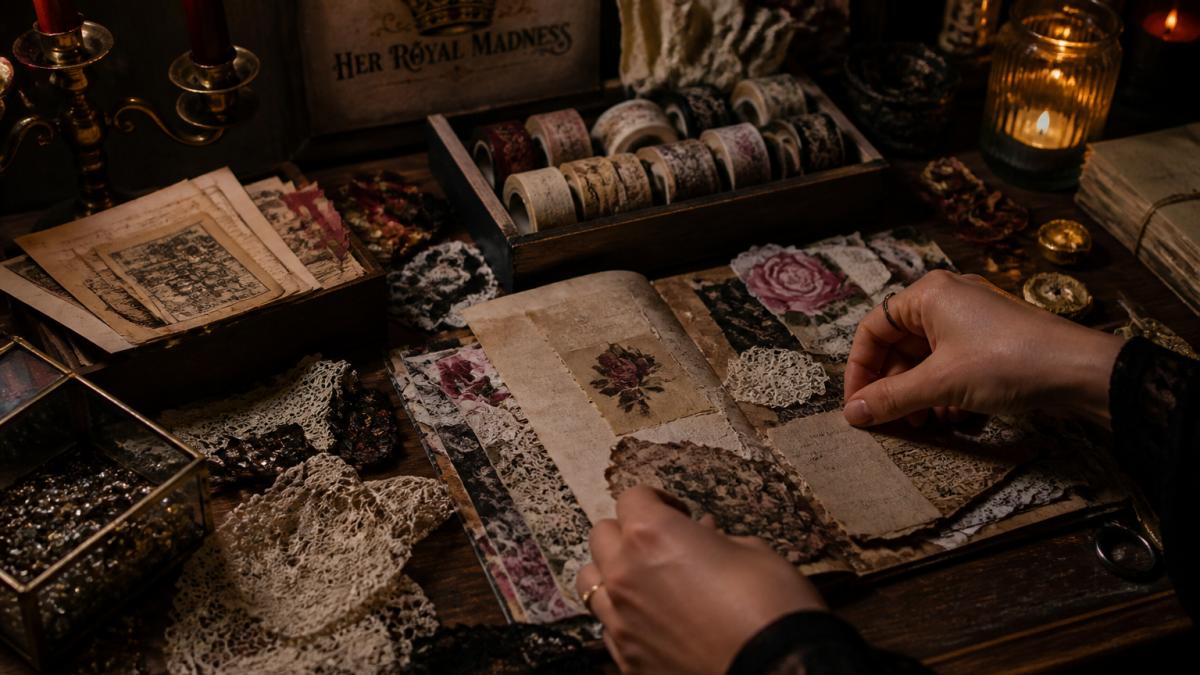
The supply list is short and cheap. A common starter kit looks like this:
- A blank or discbound journal with sturdy pages, or a stack of mixed paper signatures
- Acid-free glue sticks and a small bottle of liquid adhesive for heavier pieces
- Washi tape, masking tape, and paper clips for temporary holds
A mistake we see often is gluing directly over both sides of a page before the layout is settled.
Junk Journal Printables: Instant Ephemera for the Impatient Muse
Junk journal printables are downloadable sheets of pre-designed ephemera, tags, labels, pockets, journaling cards, vintage-style cutouts, that you print and cut at home. They're the fastest way to fill a page when real scraps run thin or you want a cohesive color story.
This is where printable journaling earns its keep. Instead of hunting for matching ephemera across three craft stores, you print a themed sheet and cut it apart.
Best Notebooks for Art Journaling: Paper That Can Take a Beating
The best notebooks for art journaling use heavier paper, typically 90 gsm and up, with a surface that handles wet media without bleeding through.
Here's how the weights actually map to media, so you can match the book to what you'll really do:
- 90 to 120 gsm: Fine for pen, pencil, light marker, and collage. Too thin for washes; expect ghosting on the reverse side.
- 120 to 160 gsm: A comfortable middle for mixed dry and light wet media, bullet journaling, and layering washi and stickers.
- 140 lb (roughly 300 gsm) cold-press watercolor paper: The workhorse for watercolor and heavy mixed media. Handles wet washes without buckling if you tape or clip the page down.
What most guides miss is sizing. Cold-press paper has a textured "tooth" that grabs pigment beautifully but shreds fine pen lines. Hot-press is smooth and better for detailed ink work but buckles faster under heavy washes.
Binding Matters as Much as Paper
A great paper in a bad binding is a frustrating notebook. For art journaling, look for these binding styles:
- Lay-flat binding (sewn or glued): Pages open flat so you can work across the gutter. Best for mixed media and collage.
- Discbound: Pages lift out and reorder, which suits people who work on single sheets and reassemble later. Refill pages are widely available.
- Case-bound (hardcover): Durable and giftable, but pages curve into the spine and can be awkward for wet media near the gutter.
- Wire-o / spiral: Opens flat and folds back on itself, handy for travel, but the wire can dent in a bag.
A Quick Medium-to-Notebook Match
- Mostly pen and pencil: A 100 to 120 gsm sketchbook with a smooth or lightly textured surface.
- Marker and light wash: 120 to 160 gsm, and test a corner page first for bleed-through.
- Watercolor and heavy mixed media: 140 lb cold-press, lay-flat binding, and clip the page down while you work.
- Collage and junk journaling: Sturdy pages plus a binding that lets you add bulk without cracking the spine.
If you're layering glue and paint, a lay-flat binding or discbound system keeps pages accessible while you work. And if you're not sure which medium will dominate, buy one step heavier than you think you need. The paper you regret is almost always the thin one.
Daily Planners: Structure for the Gloriously Disorganized
A daily planner works best when its format matches how you actually think, not how you wish you thought. Undated suits people who skip weeks and hate wasted pages; dated suits anyone who needs the calendar to do the remembering.
For journalers coming from printable systems, an undated planner is the closest analog: you print or fill only the pages you need, and a missed week costs you nothing.
How to Choose Your Alternative: A Decision Framework
Use this framework to narrow the field fast. Answer in order and stop at the first question that matches your situation.
- Do you want to print at home? If yes, prioritize printable journal providers and check file dimensions, license terms, and paper recommendations before buying.
- Do you need it to survive wet media? If yes, choose mixed media or watercolor notebooks at 140 lb and skip standard printables on thin paper.
- Is your stash the problem, not the book? If you have plenty of scraps and no structure, buy junk journal supplies and a sturdy blank journal instead of more downloads.
- Do you abandon planners? Choose undated, whether printable or bound.
- Do you want zero setup? Buy bound. There is no shame in it.
On pricing, we won't quote figures we can't verify. Printable providers vary widely in what a download includes, how many pages you get, and whether reprints are allowed, so compare value per page and per license rather than sticker price alone. For our own paper goods and printables, current pricing lives on each product page.
Final Thoughts: Long Live the Madness
The best alternatives to Ink and Page aren't a single product; they're a match between format and temperament. Printables reward the tinkerer. Bound notebooks reward the minimalist.
Our advice: buy one thing that solves your actual bottleneck, not five things that solve a fantasy version of your hobby. If your bottleneck is paper and ephemera, our Creative Stationery & Paper Arts collection is a sensible place to start.
Frequently Asked Questions
What are the best alternatives to Ink and Page?
The best ink and page alternatives depend on your needs. For printable convenience, look for digital download shops offering instant PDFs. For tactile satisfaction, seek bound journals with archival paper. For mixed media, choose notebooks with heavy paper stock. For planning, consider undated daily planners. Her Royal Madness Co. offers printable paper goods and curated stationery that blend whimsy with function, giving you a creative outlet without the subscription commitment.
Where can I find printable junk journal pages?
Printable junk journal pages are available from independent digital creators and boutique shops. Look for high-resolution PDFs with vintage-inspired ephemera, journaling cards, and themed backgrounds. Check licensing for personal versus commercial use. Her Royal Madness Co.'s Creative Stationery & Paper Arts collection includes printable designs with a gothic, whimsical edge. Always test print on a few sheets first to check ink coverage and paper compatibility before committing to a full project.
Which notebooks work best for art journaling?
The best notebooks for art journaling have heavy paper (around 120-180 gsm), lay-flat binding, and acid-free pages. Watercolor requires 200 gsm or higher to prevent buckling. Mixed media with collage and light washes works well with 140-160 gsm. Look for stitched or glued bindings that open flat. Avoid thin paper if you plan to use wet media. For beginners, a mixed-media notebook with textured paper offers forgiveness and versatility without the premium price of cotton watercolor paper.
What supplies do you need to start junk journaling?
Start with a blank journal or notebook, a glue stick or double-sided tape, scissors, and a collection of ephemera like old book pages, tickets, and patterned paper. Add washi tape, stickers, and a pen for writing. Optional supplies include distress ink, stamps, and fabric scraps. Junk journal supplies can be gathered from everyday life, but curated kits save time. Her Royal Madness Co. offers themed paper goods and ephemera packs to jumpstart your stash without hunting through thrift stores.
Ordinary is overrated, and so is a journal that doesn't fit how you actually create. Whether you end up printing, binding, or gluing scraps until midnight, we hope this guide saved you a wasted purchase or two. Come wander the shelves at Her Royal Madness Co. and see what unexpected treasure follows you home. Long live the madness.
